
For my last book club, we read the classic bookThe Edible Woman, by Margaret Atwood. This book follows Marian, a woman in her twenties living in Toronto. She is dating a man, Peter, and she gets engaged. While she moves forward doing all the things that are culturally appropriate for her to do in 1968 as she prepares for marriage, things do not go as planned. I’d write more, but best if you see how it all deliciously unfurls.
The last time I read this book was 15 years ago. when a couple of my sisters and I had started a Margaret Atwood themed book club. We started with this book and I even made a cake in the shape of a woman for our first meetup. This was a time when my children were under 5, so that book club was short lived. I don’t think we re-read any of her other books together, but we continued to read Atwood’s books as they were released.
What is the Good Girl Archetype?
The good girl is a woman who is endlessly giving and has no needs of her own. This woman is responsible and never complains (or judges herself when she does). In school, the compliment given would be, “she is so well-behaved”. She is extremely flexible and accommodating to others needs and demands.
You may be part of this group if you ever found yourself at one point (or many points) in your life reflecting, “Do I have any needs? I don’t really know.”
I’ve noticed so many women in midlife realize that they’ve been stuck in this role, first in their childhood, then in their jobs, then into their romantic relationships and then into being a mother (if that was part of her/their journey).
Being a good girl is a gift & a wound. Being a good girl is something greatly rewarded by others. At a funeral or celebration of life, these qualities are often celebrated – “She never thought of herself and always put others first”. It is also a wound – being self-less comes at a cost: burn out, illness, resentment, and addiction are a few ways it can show up.
Also, if a woman decides to shed her good-girl archetype, it can initially be met with a deep resistance by others or a shaming by the community or society at large.
Shedding this archetype requires others in your life to step up, and they might not want to.
While Margaret Atwood explores the archetype of the good girl in a witty and irreverent work of fiction, I’ve noticed over the past year that a variety of books have come out on the topic of the good girl. And all non-fiction. The Good Girl does not have a singular experience – these books exemplify a few ways it can show itself.
For Men & Non-Binary Individuals
Before we dive into the books, if you’re a man or non-binary person reading this post, I encourage you to keep reading. Here are a few reflective questions for you.
- Do you resonate with any parts of the good girl archetype?
- What does a good boy or good non-binary person archetype look like?
- How has being a good boy or good non-binary person been similar or different for you than the classic good girl archetype?
- How have you noticed the good girl archetype be reinforced in your family, community and/or culture?
Nice Girls Don’t Win: How I Burned it All Down to Reclaim my Power
This book is authored by Parvati Shallow of the TV show Survivor. She is one of the all time best players. If you’ve been reading my posts for a little while, you may know that I’m a big fan of the show Survivor. Check out Outwit, Outplay, Outlast: Lessons from Survivor to Thrive in Midlife.
Parvati is not a classic good girl in life or in how she played the game, but because of this she was met with an abundance of public-shaming. This in turn lead to an abundance of self-loathing and an attempt to be a good girl in life and how she played in a return season of Survivor. Parvati shares her journey through this process and then how she let that all go and reclaimed her power and authenticity.

Even if you’ve never watched an episode of Survivor, this is still a great story.
Auto-Immunity & The Good Girls: How Permission to Put Ourselves First Has the Power to Keep Us Well
I brought this book by Sara Hirsh Bordo into my latest post, Your Body Has Entered The Group Chat, and it sparked me to write about the archetype of the Good Girl.
You might be a good girl, if you got mildly triggered by the phrase, “put ourselves first”. You might’ve had the thought:
“Isn’t that selfish?”
“If everyone put themselves first, wouldn’t our community fail?”
If the phrase “put yourself first” causes a mild existential crises, this might be an area to explore.
Putting yourself first isn’t about disregarding everyone else, it’s about pausing and considering your own needs too.
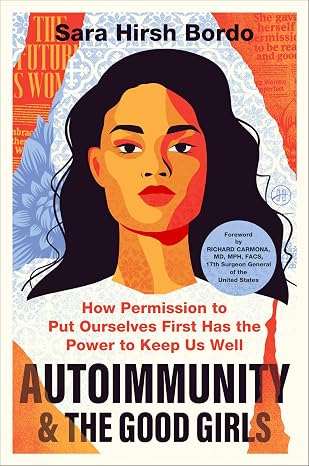
Sara did some research and noticed that 6 out of 10 people who have autoimmune based illnesses are women who were the oldest daughter or the only daughter. She then researches even deeper and notices the emotional patterns of these women. Many were being taught to take on the good girl archetype in their family at a young age.
Sara shares her journey of healing from a multitude of health issues both by working with the medical system and also doing a lot of inner reflection and then doing a ton of research.
This is not a how-to heal type of book. What it offers is a personal story, research about this topic and ways Sara started to truly listen to her body and needs. If you’ve ever suffered from autoimmune issues, this book is a must read.
Actually, Nevermind
This is a book by the comedian Taylor Tomlinson. As a person who grew up in a religious community, I relate to a lot of Taylor’s comedy. At first glance, Taylor Tomlinson does not seem like a good girl. The book is a series of essays, most of them a summary of her comedy specials. She shares about the loss of her mother, her mental health, leaving Christianity, realizing that she was bisexual and the relationships with her family. So in summary – she is not stuck in the archetype of being the good girl, or she’d never have gone on this journey.

But Taylor Tomlinson was taught the value of being a good girl, and as a reader I could see how this has haunted her on her path to authenticity. I admire so much of what Taylor has worked through, in the public eye no less. Her most striking essay around this dilemma is in her chapter about becoming a late night host. Becoming a late night host is no small feat (especially for a woman), but after she accepts the job she ends up having a long-term illness that never seems to go away.
She ultimately has to make a decision not to be a good girl, and quit the show. This disappoints many around her and she is met with judgment from others and herself.
There is no room for nuance – to be a good girl is to shut up, accept that no one will make the changes she’s asking for, not complain about any aspect of her show’s format, suppress her illness and to be grateful to be given an opportunity no other woman has been given. The good girl is stuck in all or nothing thinking. Taylor tries to navigate this conundrum of listening to her internal compass amidst the demands of this situation, and she does it after hosting two seasons of the show After Midnight.
My Right Knee
If you’ve read my last two posts, you may remember I shared about my longer term right knee limitations. Normally my knee’s irritation resolves itself quite quickly, but after my last hike, it’s lingered for much longer than normal. I said out loud, “I’m irritated.” Such a simple phrase that gave me an aha moment. As I paused I noticed this fit with my emotional state around a number of things happening in my life. As a person who resonates with the good girl wound/archetype, this was how my body was amplifying something that needed to be listened to. When it’s second nature to be adaptive and brush things off and not fully listen to my needs, it was a not so subtle push to reflect on my own needs.
But I Love Being a Good Girl
If you’re fully embracing and loving your good girl archetype and it’s not causing any problems – enjoy! Being a good girl isn’t inherently the problem – there are great qualities in this archetype, generosity, reliability, integrity, groundedness, compassion and more. However, if being a good girl is causing you problems in your life – resentment, irritability, overwhelm, burn out, addiction, illness and more – that is when it’s time to do some reflection.
Internal Family Systems Work & The Good Girl Archetype
Parts work is a great place to explore the good girl archetype (or any emotional patterns you might have). Parts work is a place to compassionately explore any place this pattern is causing you problems in your life. There are no bad parts.
Do you resonate with the good girl archetype? What are some ways you’ve worked through it? What are some edges to explore for you? Where are you a good girl in your life – in one area or many areas?