I want to continue exploring health issues this week by looking at stories about healing from the medical, emotional & spiritual lens. In my last post, Meeting Health Issues without Shame or Blame, I wrote about exploring health issues without shame or blame being the loudest voice in our heads.
What I’ve noticed over the years working with people, is that there isn’t one right way to heal or attempt to heal from an illness. There are so many avenues to explore – the conventional medical system, the complementary health system or a combination of the two. I’ve found that some people are very adamant that they will only follow conventional medical knowledge, others will only follow complementary health options and most people fall on a spectrum that include both.
If one route isn’t working, try another! Today I’m going to share some books about the different paths people took to find healing for their health issues. The intention of this post is to inspire you to listen to YOU on your health journey. What approaches are an absolute no for you? Which are approaches are a maybe? Are any an absolute yes? What resources do you have beyond time & money: resilience, determination, intelligence, patience, clarity, groundedness, playfulness? How might these be your ally on your journey?
Conventional Medicine
Sometimes a medical issues is just that – a medical issue. I remember when one of my sons was younger and he was having frequent bloody noses along with a cold and occasional fevers. Early on I went to my doctor who was curious whether it was allergy related and referred him to an allergist. While waiting months for this appointment, his symptoms were getting worse. I took him to a naturopath. She determined that it was a sinus infection and referred me back to my doctor to get antibiotics. The naturopath also recommended probiotics. The antibiotics and probiotics were what my son needed, and he got better. We didn’t need to explore an emotional or spiritual lens in this scenario.
Run Towards the Danger – by Sarah Polley
This book covers a range of topics, but today I want to focus on the chapter that inspired the title of the book – Run Towards the Danger. This chapter is about Sarah’s journey towards healing from a concussion. Sarah is interested in conventional medicine. She has no success from the conventional medical approach for a long time, and then she hears about a doctor in the USA using a different method with an abundance of success. She seeks him out and has success healing from her concussion.
Dr. Martine Rothblatt
This woman is an exceptionally smart person. When I listened to this podcast – The Incredible Polymath of Polymaths, I was struck by how she dove deep using her current skills and resources to expand into new territory and ultimately finds a cure for her daughter’s health issues of pulmonary hypertension and neuroblastoma. She didn’t veer off into complementary paths for healing, she honed in on finding a medical path to healing, and beyond all odds she did. Her success also offered healing to many others world-wide.
While I don’t think most people (including myself) would have gone to the places she did, I think it’s a testament to exploring what our skills & resources are and how to amplify them.
A Mind-Body-Spirit Approach
Sometimes a medical approach is all that is needed and then there are times when an health issue is an invitation to go a little deeper. My first introduction to looking at the psychological aspects of an injury or illness was with Louise Hay’s book You Can Heal Your Life. This book encompasses her research exploring the emotional patterns of different illnesses and injuries. Later I was introduced to Dr. Gabor Maté’s book When the Body Says No. This book goes a level deeper and points to emotionally based patterns that contribute to illness – multiple sclerosis, cancer and more.
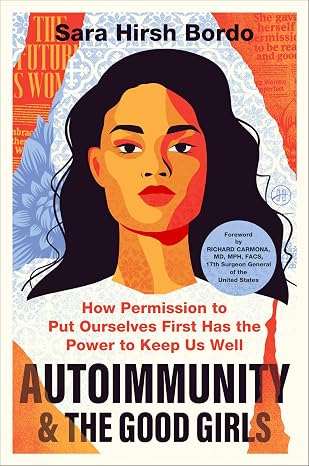
Autoimmunity & the Good Girls: How Permission to Put Ourselves First has the Power to Keep Us Well by Sara Hirsh Bordo
While listening to Monica Lewinsky’s podcast Reclaiming, I was introduced to Sara Hirsh Bordo. Sara did some research and noticed that 6 out of 10 people who have autoimmune based illnesses are women who were the oldest daughter or the only daughter. She then researches even deeper and notices the emotional patterns of these women. Many were being taught to take on the good girl archetype in their family at a young age.
Sara shares her journey of healing from a multitude of health issues both by working with the medical system and also doing a lot of inner reflection and then doing a ton of research. It is amazing to see that the forward of the book written by the US Surgeon General.
This is not a how-to heal type of book. What it offers is a personal story, research about this topic and ways Sara started to truly listen to her body and needs. If you’ve ever identified as the Good Girl or suffer from autoimmune issues, this book is a must read.
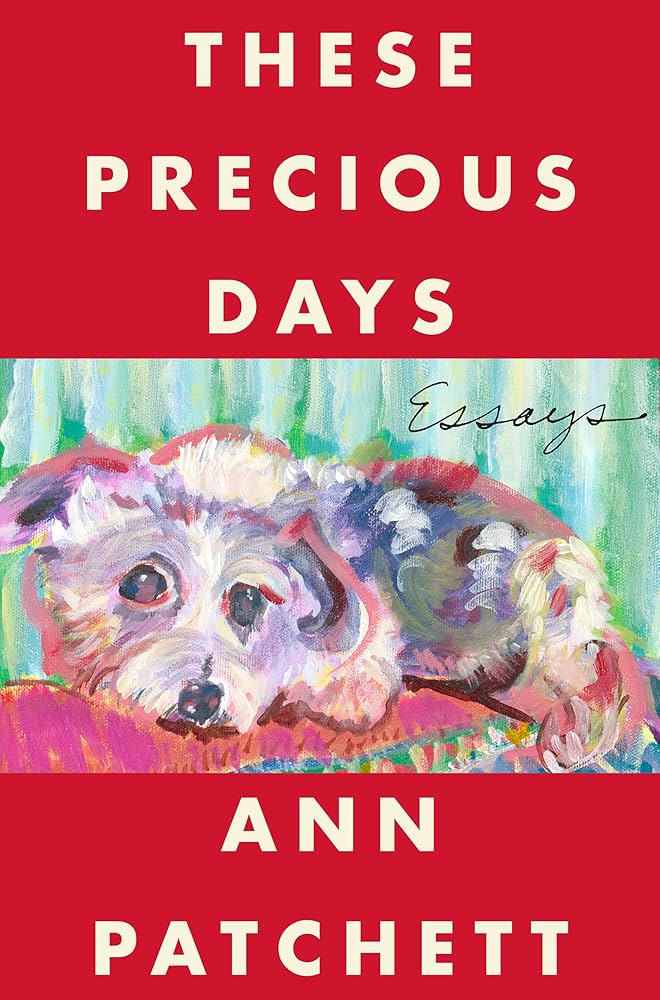
These Precious Days – by Ann Patchett
If you’re an Ann Patchett fan, this book is a delight. It is a series of short stories about her life. If you read her most recent book Whistler, you’ll see where she drew inspiration for this story from her own life. I enjoyed reading this book slowly – one short story an evening before bed.
The author Ann Patchett has a short story about her friend Sooki in this book in the story titled These Precious Days. Sooki has been doing a variety of treatments for her pancreatic cancer over the course of many years. Part of her journey has her living at Ann Patchett’s house and she heals a deeper emotional part of herself during her time there.
What I also loved about this short story was that Ann Patchett shares to Sooki what she thought Sooki might be getting from her stay at her house, and Sooki disagrees and corrects her. How many times do we think we know what someone is going through and we’re wrong?
Sooki ultimately shares that her time at Ann’s place has led her to like herself again. This doesn’t heal the cancer, which is at an advanced stage, but she still gets a profound emotional healing from this experience.
Reflective Questions
These are questions to help you think more broadly about your health issue to help you shift from looking at it one-dimensionally.
What does this health issue make you do in your life that you wouldn’t do otherwise?
If this is a hereditary family health issue, can you see any common emotional patterns?
If you could become detached from the outcome that success = healing physically, what meaning might you infer from this health issue on your journey as a whole in this body in this world?
My Right Knee
In my last post I wrote about my longer-standing challenge with my right knee. When I reflect on this from the question – what does this health issue make me do in my life that I wouldn’t otherwise – the answer is: slow down. When I go on a hike, there is a satisfaction in going at a good pace. I’ve got my Strava going and part of me wants to crush it. This past weekend I was hiking in Quebec and while part of me was annoyed that I had to slow down, another part got to sit more often and enjoy the stunning fall colours and pause in more spots for longer periods of time. I wouldn’t have done this otherwise. I’m still not fully appreciative of this, but I can acknowledge that there is something there for me in this experience.
The Spiritual Lens
I find that most people don’t start with the spiritual lens when it comes to health issues, but it’s in the periphery of their mind. If you’re a spiritual person, you might have an instinct about your health issue – perhaps it’s related to a deep-seated emotional pattern from your childhood, perhaps it’s past trauma, maybe it’s related to inter-generational trauma or perhaps it’s karmic.
When it comes to taking a spiritual lens, the answer often needs to come from you. Deep reflection and support on this journey can help you connect to these answers.
I’ve done some past-life regressions and Akashic work, and I try to always keep in mind that channeling isn’t even close to 100% accurate. But this work has presented me with themes. I’m looking for messages that are consistent across different practitioners. Also what resonates with ME? What things matter? What things are just noise?
Sometimes health issues inspire us to reconnect or connect us: meditation, prayer, religion or community. Be Love Now by Ram Dass, Chapter Seven – The Way of Grace is one of my favourites on this topic. Ram Dass has experienced a stroke and lost his ability to walk and speak with ease. This chapter are his reflections on this experience, and it isn’t about bright-siding it.
What is one way you might use spirituality as support through your health issue? What is a book or movie or podcast that inspires you on this topic?
Who is inspirational on social media to you about this topic?
What is a spiritual practice you’re curious about? Prayer, meditation, mindfulness, yoga, exploration about consciousness? Or something else?